
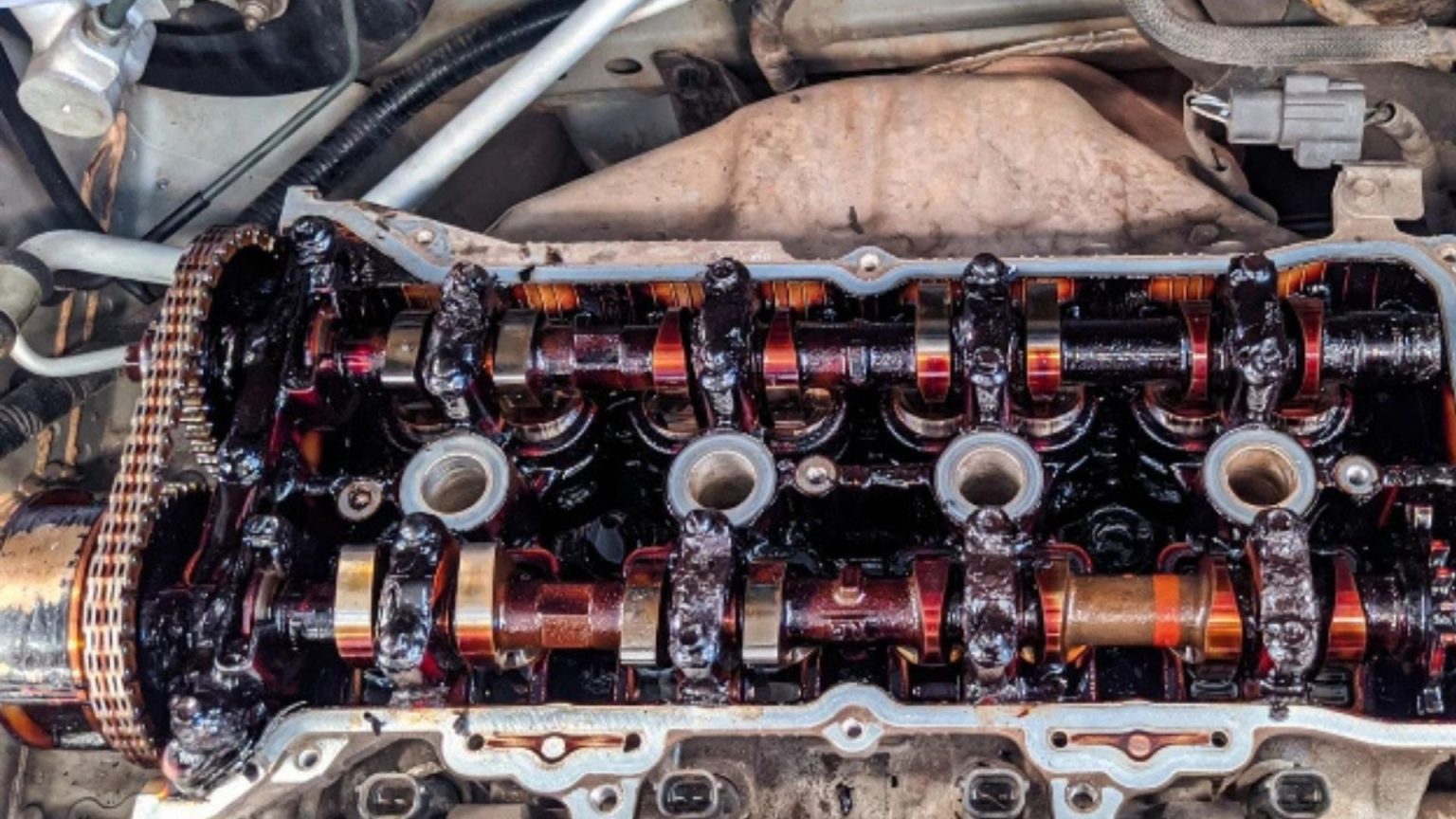
The key to preventing engine sludge is regular maintenance and wise maintenance practices. You can prevent sludge formation in large part by using the right kind of oil, changing the oil frequently, and monitoring engine health.
You can shield your engine from needless wear and expensive repairs by addressing minor problems early on and adhering to your car’s maintenance plan. Over time, a clean engine lasts longer, operates more effectively, and provides you with more peace of mind each time you drive.
In this guide, I will walk you through what engine sludge is, its prevention, and its causes.
Let’s dive in!
Learn about How Much Does An Engine Swap Cost? with this detailed guide!
What is Engine Sludge?
Oil degradation can cause engine sludge to form, making it almost tar-like in consistency and thus restricting the flow of oil or damaging engine parts. There are a number of reasons why engine sludge can form in a vehicle engine.
Among the most common causes of a clogged air filter is the infrequent changing of the car’s oil. The engine oil tends to collect dirt, water, and combustion residue. When the engine oil becomes stale and accumulates, the result is the formation of sludge.
Even short drives or stop-and-go traffic could also contribute to it. If the car is not reaching its normal running temperatures, moisture and gas vapors cannot burn off effectively. Whatever condensation forms then mixes into the motor oil, promoting sludge formation.
The use of the wrong kind of oil or sub-standard oil is another factor. Oils that are not of the manufacturer’s specifications or lack the right amount of detergents tend to fail to suspend dirt effectively, causing it to sink and accumulate sludge.
engine overheating can also exacerbate the problem. When oil is subjected to excessive heat, it deteriorates faster and thus loses the ability to lubricate and clean engine components.
This deterioration accelerates the formation of thick deposits.
This leads to the formation of thick deposits in the engine oil.
Lastly, the lack of ventilation in the engine, created by the defective function of the PCV (positive crankcase ventilation) system, holds bad gases and moisture within the engine. Contamination from the gases would mix with the oil if the aforementioned elements are not well ventilated.
Knowledge of the causes of engine sludge makes the first step to avoid such sludge. With appropriate maintenance and proper driving techniques, you can maintain a clean engine and keep it running well.
Learn about How Much Does It Cost to Rebuild an Engine? with this detailed guide!
What Causes Engine Sludge?
Sludge buildup occurs when your oil can no longer keep your engine clean and well lubricated. It is due to several factors that develop over time because of driving habits, maintenance issues, or mechanical faults.
The major reason involves skipping or operating on late oil changes. As the oil ages, it accumulates dirt, metal particles, moisture, and byproducts of combustion. If allowed to stay within an engine for too long, these contaminants cause the oil to thicken and form sludge.
Another is short-distance driving. This is because, if the engine does not reach its full operating temperature. Usually moisture and fuel vapors cannot get burnt off. Thus, condensation mixes with the oil, an action that hastens sludge formation.
Sludge can also be caused by the wrong type of oil used or low-quality oil. Oil not meeting the specifications may not have adequate additives to prevent deposits and resist heat breakdown.
Overheating of the engine accelerates oil deterioration. Excessive heat forces the breakdown of oil molecules; this reduces lubrication and builds thick deposits inside an engine.
A positive crankcase ventilation system that is faulty will trap moisture and harmful gases inside the engine. Without any ventilation, these contaminants mix with the oil and contribute to sludge buildup.
Understanding the causes will help in the prevention of engine sludge and make it easier to keep. The engine cleaner and healthier with proper care and regular maintenance.
Learn about Engine Sputtering with this detailed guide!
How to Prevent Engine Sludge
The best way to avoid problems with engine sludge is to ensure proper maintenance and driving practices. There is also some preventive work you can undertake to keep your engine clean.
“Among the most critical maintenance tasks is changing the engine oil on a regular basis. The new motor oils contain detergents that keep harmful particles in suspension so they won’t settle on engine surfaces. Adhering to manufacturer guidelines on engine oil changes, even cutting back on mileage if you drive in extreme environments, will help minimize the risk of sludge development.”
The type and quality of oil used are equally important. You should always select an oil that matches the requirements of your vehicle, irrespective of whether it is conventional, synthetic, or a particular viscosity. Better-quality oils are better at holding out against degradation and are better at handling heating, which prevents thick layers from forming.
Letting the engine warm up to operating temperature is another factor. The occasional extended road trip can work to burn off the moisture and fuel vapor residues that tend to build up on shorter drives. It serves to decrease condensation within the oil, a primary contributor to engine sludge.
Maintaining the engine cooling system is important to ensure that it does not overheat, which could speed up degradation of the engine oil. Ensuring that adequate levels of engine coolant, as well as a functioning cooling system, helps to regulate engine temperature.
Finally, regular upkeep of the PCV (positive crankcase ventilation) system secures the safe removal of harmful gases and vapor from the engine. A clogged, stuck-open PCV valve often retains the pollutants, which predisposes the buildup of sludge.
By sticking to the maintenance routine and ensuring you focus on these important areas mentioned above, you will be able to prevent the development of engine sludge.
Learn about Best Engine Air Filter with this detailed guide!
CONCLUSION
Engine sludge is a problem that can be detrimental to your engine if it gets out of hand, but it’s easily avoidable. By knowing the leading causes of engine sludge, such as inadequate oil changes, taking short drives, using the wrong oil.
Engine overheating, and problems with the PCV valve, you can take the appropriate steps to ensure your engine stays clean. Keeping your engine clean will ensure it functions well and has a long life whenever you take it out for a spin.
Learn about Common Engine Noises with this detailed guide!
FAQs
How long will it take before sludge forms in the engine?
Engine advances like reduced sump capacity, turbocharging, and longer milage intervals have contributed to the speedy development of sludge buildup. There were cases where the phenomenon occurred in as little as 20,000 miles/32,000 kilometers.
Why is my oil disappearing without a leak?
Oil Burn. Chances are, even if there isn’t an oil leak, there is definitely an engine burning oil. It occurs when there are defective engine components which cause oil to seep inside the combustion chamber. When fuel is ignited there, it burns blue-tinted exhaust smoke together with the fuel.
Can one consider the 2-month oil change acceptable?
How Often to Change the Motor Oil. “Every 3,000 miles or every three months” is obsolete, thanks to advances in engine design and oil. Many automaker change intervals are at 7,500 or 10,000 miles, six or 12 months.
What makes engine oil turn into sludge?
“Black sludge” or “oil sludge” refers to a gel or semi-solid substance found in an internal combustion engine that, when built up, poses a catastrophic potential. Black sludge is usually formed in contaminated engine oil, which combines with moisture and/or high temperature.
Why is the oil vanishing without a leak?
Oil Burn. If you do not have an oil leak, it’s probably an oil burn. This process occurs when defective engine parts let oil escape into the combustion chamber. The oil gets mixed with fuel to be ignited in the combustion chamber, leading to blue exhaust smoke.
Learn about Best Engine Degreaser with this detailed guide!