
Having a flat or a leaking tire is one of the most frustrating and inconvenient times when driving, but that does not mean the tire needs a full change. Most times, if you properly apply a car tire patch, you can safely restore the tire and get back on the road.
We frequently utilize Slime tire sealant (stops flats for 2 years!) when flat tires happen on our riding lawnmowers, tractors, trailers, ATVs/UTVs, dirt bikes, wheelbarrows, and other non-highway tires. Nevertheless, some cuts and gashes are too big for sealant to fill; therefore, you must patch your tire. Knowing how to patch a car tire will not just save you money, but makes you confident to be able to handle minor tire issues on the road.
Fortunately, if the tire is otherwise in good shape, you might be able to fix the leak on your own. With the correct equipment, patching a tire is simple and may quickly get your tire back in working order.
Well, in this article, we’ll walk you through how you can patch a tire. Even so, the answers to the following questions will be discussed:
- What results in a flat tire?
- How do you find a leak in your tire?
- How to patch the tire?
- What can you do to maintain a good tire?
So, let`s get into it!
Learn more about Tire Sizes with this detailed guide.
What Results in a Flat Tire?
A flat car tire is the most frequent issue when the tire loses its inflation pressure, which deflates it and leaves it without support. Flat tires have different reasons, which can occur from external or internal problems.
Having a punctured tire is the most reasin for a flat tire. Sharp material or object on the road, which can be screw or a broken glass, which puncture the tire resulting to air loss.
There can be numerous degrees of punctures, which may occur on the sidewall or on the tread part. Smaller punctures may lead to leakage, whereas larger ones may result in an abrupt release of air.Problems with the valve stem are a common cause of damage too. If needed, air can enter and leave a tire through a valve stem.
It can cause air leaks and a flat tire if it is compromised, becomes faulty, or becomes loose. Also, tires have a potential for wear and tear, which can cause air leaks and eventually flat tires.
The use wears down a tire’s tread, and when it gets too worn out, it may become more susceptible to damage or punctures. Furthermore, tires that have worn out may develop cracks on their sidewalls or tires, which may lead to leaks.
Flat tires can also be induced by under- and over-inflated tires. If a tire is underinflated, impacts are likely to damage it and it may get punctured and torn. In other cases, when a tire is overinflated, it becomes stiff and loses its elasticity, which may bring about blows and punctures.
Lastly, factors such as poor maintenance of the tires or defects during the manufacturing process might also occur. A failure of the tires could occur due to a design or material defect in the tires.
Learn more about Tire Rotation with this detailed guide.
How to find a leak in your tire?
This are steps to follow that will guide you in other to find a tire leak:
- Pump the car tire up: It is necessary to pressurize the tire adequately in order to detect leaks. Inflate your tire with air until it reaches the recommended pressure (given in psi) in your car’s service manual.
- Take a thorough look at the tire: You should examine your tire for a moment before moving on to more time-consuming treatments. Your leak has been discovered if there are any holes, cuts, or protruding objects from the tire.
- Keep an ear out for a hissing noise: You might be able to hear the issue even if you can’t immediately see it. A hissing noise is a certain indicator that air is leaking from your tire and can direct you to where the leak is.
- Check for air by feeling around the tire: Even if you can’t hear it or see it, you might be able to feel the leak if you carefully run your hand over the tire.
- Use soap and water (simply mix them): Spraying some window cleaner or soapy water on the tire could be helpful. Anywhere on the tire’s surface where you notice bubbling indicates a leak. Apply the soap-and-water mixture to the tire. If a spray container is not available, you can just pour the liquid over the tire. You can also use a spray bottle to apply the mixture to the tire. Look out for bubbles. Soap bubbles will form as air leaves the tire and comes in contact with the soapy water mixture. You have located your leak if you see soapy water bubbling in a specific area of the tire.
Learn more about Tire Pressure Gauge with this detailed guide.
How to patch the tire?
Here is how to Patch the tire once you’ve found the place leaking:
- Clean out the hole using your air die grinder. Choose a pointed bit that will slide into the leak’s hole. After cleaning the area and roughening the sides, we will ensure the patch adheres well when we put it in.
- Switch to a grinding stone bit on the die grinder. Spray “Pre-Buff Cleaner” on the interior of the tire where you will apply the patch. Use the grinding stone to smooth out and clean the vicinity of the hole, which is about two inches in diameter. This will provide a spotless surface for the patch to adhere to the tire.
- Take off the plastic covering the tire patch’s sticky side. Your tire’s inside will be in contact with this side.
- Insert the patch’s pointed end through the hole. It is best to push the sharp part out of the tire’s exterior once it has entered the hole from the inside. Grab the patch’s sharp side with a pair of pliers. Pull the patch’s pointed end away from the tread of the tire. This strongly adheres the adhesive portion of the patch to the tire’s inner side.
- Roll the tire patch’s interior surface with a roller. By doing so, you will eliminate any air bubbles that may have existed between the patch’s sticky side and the buffed surface. Now the patch is tightly bound to the tire.
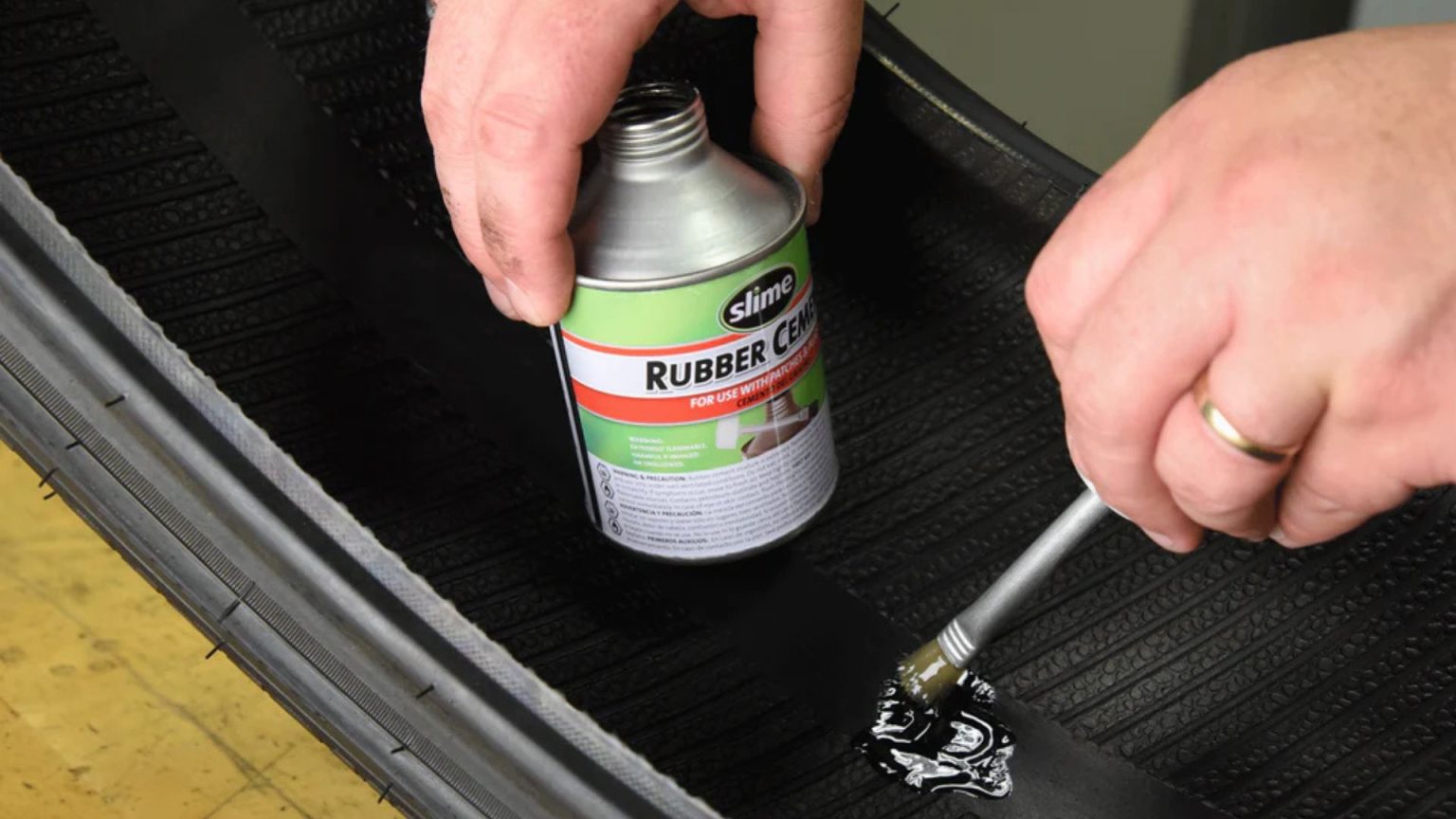
- Apply rubber patch sealant to the tire’s inner side. Cover the entire patch as well as around the patch edges to the tires. This ensures that there won’t be any leaks whatsoever.
- Let it dry. It shouldn’t take more than a few minutes. While you wait, cut the stem of the patch so that it is flush with the top of the tread using a pair of side cutters (or scissors).
Learn more about Tire Cupping with this detailed guide.
What can you do to maintain a good tire?
Maintaining a tire in good condition is very important for best performance, durability ans safety. Here are important maintenance tips you will need:
- Maintain a consistent tire pressure.
- Inspect the car tire pressure onece a month
- Ensure to rotate the tire on a regular basis.
- Check the tires for any cuts or cracks.
- Keep it properly aligned.
- Prevent dring on pothholes or road dedris.
- Lastly, avoid overloading your car.
Conclusion
Fixing a tire can be a valuable skill that, in the long run, can save you time and money. To fix a tire, you must follow the right steps and know how to repair a tire that can still be driven safely. All tires can be repaired, but you must prioritize safety. Taking care of a patched tire can ensure that it serves you well. There are, however, limitations on what kind of tires can be repaired.
Learn more about Tire Brands with this detailed guide.
FAQs
How long can I drive on a patched tire?
The good news is, if you apply the tire patch well, it can last up to the remaining life of the tire. That means if it still has 40,000 for it to avaragely last, the patch will be able to hold it up for that long.
Is it better to plug or patch a nail in a tire?
Patching is the best option. It is much more safe and last for a long time,using a plug is not durable it can come off during acceleration or heavy braking.
What tires cannot be patched?
When someone punctures the tire along the sidewall, they will just need to replace it. If the puncture is more than ¼-inch, they cannot fix it.
Are patched tires safe at high speeds?
Most car tires producer have create a rule that a punctured and patchehd tire does not have its speed rate anymore. It should be not be used for speeding not faster 85 mph.
What is the difference between a tire patch and plug?
Tire plugs are fitted into the puntured hole to seal it up. It is quick and easy process, but doee no last long, WHILEN. A tire patch, is glued on the part where the hole is. It takes a long process but its is a permanent and long lasting solution.