
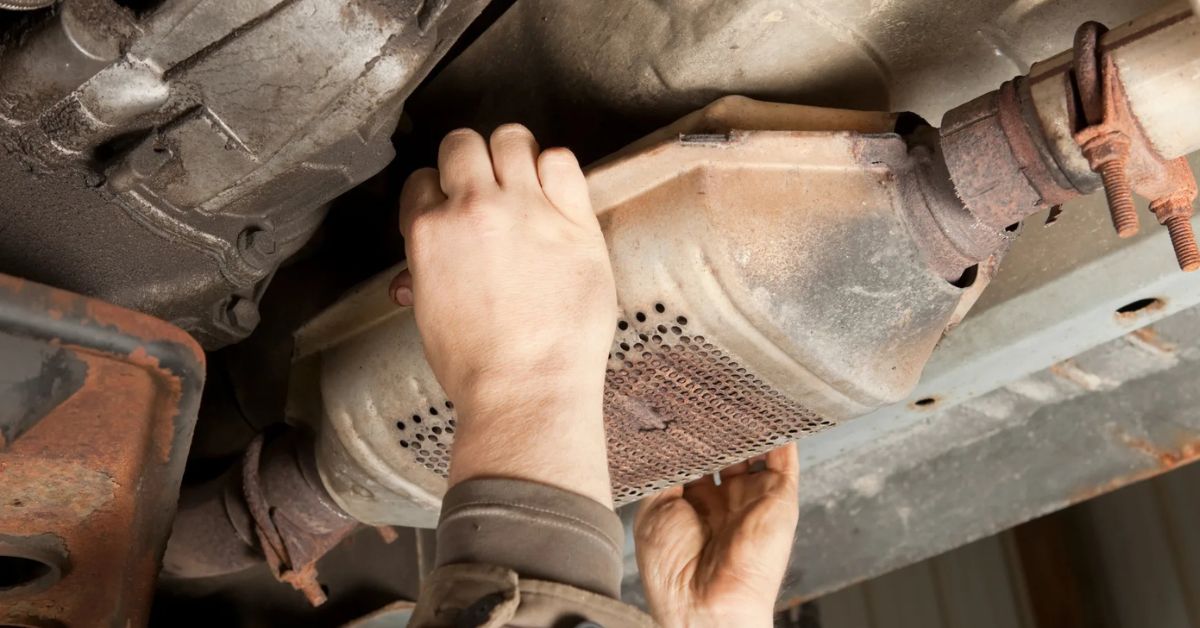
The catalytic converter plays an Important role in the reduction of harmful Pollutants and keeping current new vehicles environmentally friendly. Normally, it works quietly under your vehicle. This component is vital for meeting emission standards and maintaining smooth engine operation. Without it, gases that are harmful, which were produced during combustion, would be emitted into the atmosphere.
Without any doubt, the development of vehicles made the world more convenient, but it also increased pollution. Automobiles emit pollution when they are running, which can discolor buildings and lead to poor air quality.
Despite how convenient they may be, automobiles pollute the environment and lower the quality of life for those who live in major cities with plenty of traffic. Fortunately, technology has developed a remedy: the catalytic converter.
Well, in this article, we’ll be discussing close to everything you need to know about catalytic converters. Nevertheless, we’ll get to be discussing the answers to the following questions:
- What is a catalytic converter?
- How does a catalytic converter work?
- What is the history of a catalytic converter?
- How do you tell if your catalytic converter has gone bad?
- What are the types of catalytic converters?
- Why do thieves target catalytic converters?
- How can you prevent catalytic converter theft?
- What does the P0420 code mean?
- What’s the price of a catalytic converter?
Alright then, let’s get to it!
Learn more about Clogged Catalytic Converter with this detailed guide.
What is a catalytic converter?
A catalytic converter is an exhaust emission control device that catalyzes a redox reaction to change hazardous gases and pollutants in exhaust gas from an internal combustion engine into less toxic pollutants.
Manufacturers frequently use catalytic converters with internal combustion engines that run on gasoline or diesel, particularly lean-burn engines, and occasionally with kerosene heaters and stoves. The US auto industry originally widely used catalytic converters.
Starting with the 1975 model year, the majority of gasoline-powered automobiles incorporate catalytic converters as standard equipment to meet the U.S. Environmental Protection Agency’s more severe exhaust pollution regulations.
These “two-way” converters create carbon dioxide (CO2) and water by combining oxygen with carbon monoxide (CO) and unburned hydrocarbons (HC) (H2O).
Although “three-way” converters that also reduce oxides of nitrogen (NOx) rendered two-way converters on gasoline engines obsolete in 1981, they are still used on lean-burn engines to oxidize particulate matter and hydrocarbon emissions (including Diesel engines, which typically use lean combustion).
This is because three-way converters need fuel-rich or stoichiometric combustion to successfully reduce NOx. Despite being most frequently used in car exhaust systems, catalytic converters are also employed in electrical generators, forklifts, mining machinery, trucks, buses, locomotives, motorbikes, and ships.
Even some wood stoves utilize them for regulating emissions. Usually, this happens in response to governmental control, such as environmental rules or laws governing health and safety.
How Does a Catalytic Converter Work?
When an engine emits harmful compounds, a catalytic converter utilizes a chamber known as a catalyst to transform them into harmless gases like steam. It effectively breaks up the dangerous molecules in the gases an automobile creates before they are released into the atmosphere.
The catalytic converter, which resembles a big metal box, is found underneath a car. Two pipes are protruding from it. These two pipelines, along with the catalyst, are used by the converter to prepare the gases for release.
Engineers introduce gases into a vehicle’s engine through the “input” pipe. When these gases blow over the catalyst, the catalyst triggers a chemical reaction that breaks down the pollutants. Now, the less hazardous gases move via the second pipe, or the “output,” which connects to a vehicle’s tailpipe.
Learn more about Catalytic Converter Theft Prevention with this detailed guide.
What is the History of a Catalytic Converter?
Engineers covered inert clay-based materials with platinum, rhodium, and palladium and sealed them into a double metallic cylinder in the earliest catalytic converter prototypes developed in France at the end of the 19th century when only a small number of “oil automobiles” were in use.
A few decades later, a French mechanical engineer named Eugene Houdry filed a patent for a catalytic converter. Houdry was a specialist in catalytic oil refining because he created the catalytic cracking method, which is the foundation for all current refining.
In order to work on his catalytic refining technology and reside close to the Philadelphia area refineries, Houdry immigrated to the United States in 1930.
Houdry started a company named Oxy-Catalyst after becoming worried about the contribution of smokestack emissions and automotive exhaust to air pollution following the publication of early research on the smog in Los Angeles.
Houdry originally developed “cats,” or catalytic converters, for smokestacks before making them for warehouse forklifts that ran on low-grade, unleaded gasoline.
In the middle of the 1950s, he started researching catalytic converters for gasoline engines used in automobiles and received United States Patent No. 2,742,437 for his work.
How Do You Tell if Your Catalytic Converter Has Gone Bad?
Here are the most common signs and symptoms of a bad catalytic convert:
• Engine performs sluggishly
• Dark exhaust smoke
• Reduced acceleration
• Excessive heat under the vehicle
• Sulfur or rotten eggs smell
A mechanic must determine when it’s time to replace your catalytic converter because other components of the emissions system can also cause some of those symptoms.
The recommended maintenance schedule for your car can help you put off this moment for as long as possible—often 10 years or more. The possibility of your catalytic converter failing before its time is reduced by maintaining the health of your exhaust, emissions, and combustion systems.
Learn more about Exhaust Leak with this detailed guide.
What are the types of catalytic converters?
The following are the three current types of catalytic converters used in vehicles:
Three-Way Catalyst (TWC)
This particular Catalytic Converter is the best one available. NOx will also be changed into non-polluting materials along with CO and HC.
When CO and HC react as burning components to produce CO2, H2O, and N2, the NO and O2 processes will act as components that promote burning (oxidation).
Oxidation Catalyst (OC)
When using a CCO (Catalytic Converter for Oxidation), oxygen will react with carbon monoxide (CO) and hydrocarbon (HC) to produce CO2 and water, neither of which contain any pollutants.
Clean air must be present in the exhaust manifold for this oxidation process to function properly. In addition, because the EGR system marginally lowers NOx, exhaust gas must be recirculated through it.
Three-Way Catalyst & Oxidation Catalyst (TWC-OC)
This particular Catalytic Converter combines a three-way catalyst with an oxidation catalyst in an effort to minimize air pollution even more effectively.
Why do thieves target catalytic converters?
Catalytic converters are a target for thieves due to their external location and use of pricey precious metals like platinum, palladium, and rhodium.
Due to their high ground clearance and readily removable bolt-on catalytic converters, late-model pickup trucks and truck-based SUVs are particularly susceptible to the issue.
Thieves particularly target welded-on converters because they can quickly disconnect them. Since people use the combustion engines in the Toyota Prius less frequently, the engines usually remain in better condition, making them appealing to thieves.
Technicians frequently use pipe cutters to silently remove the converter, but other tools, such as a portable reciprocating saw, may harm other parts of the vehicle, including the alternator, wiring, or fuel lines.
Bipartisan legislation to stop the theft of catalytic converters was filed in the US Senate in 2023.
The Preventing Auto Recycling Thefts Act (PART Act) would make it a requirement that new automobiles come equipped with catalytic converters that have traceable identifying numbers. The measure would also make stealing a catalytic converter illegal.
Learn more about P0430 Code with this detailed guide.
How can you prevent catalytic converter theft?
Here’s how to prevent catalytic converter theft:
• Use a closed garage, regularly shift your car’s place, or park in well-lit areas close to exits for the general public.
• Put cameras and motion-activated lights in your parking area.
• Install a theft-prevention device.
• To deter potential buyers, paint your catalytic converter; some local police agencies even provide free painting services.
• The catalytic converters in hybrids, SUVs, and trucks are valuable or easily accessible, so be aware if your vehicle is a likely target. If you etch your license plate number or vehicle identification number (VIN) onto your catalytic converter, you may be able to notify a scrap yard that someone stole it and facilitate owner identification.
The first step in preventing catalytic converter theft from happening to your car is understanding when it might be a target. You can prevent criminals from targeting your car by adhering to these safety precautions.
What does the P0420 code mean?
low catalyst system efficiency
The P0420 error code means low catalyst system efficiency. This code signals that your car’s oxygen levels are below the required threshold (Bank 1), which is typically the result of issues with the fuel or exhaust systems.
It can occasionally be difficult to diagnose. In most cases, it is safe to keep driving while having P0420.
The driver is not at risk because of it. Most of the time, the code is not severe enough to require that you immediately stop driving your car. But, the longer you drive, the more harm your engine and exhaust systems sustain. As quickly as you can, identify and resolve this error code.
If you notice this code, you don’t need to hire a tow truck, but you should try to identify and resolve the issue as quickly as you can. Your car’s performance could noticeably deteriorate. This is a result of your exhaust system’s subpar performance.
If other codes are present that indicate there is too much fuel in your air/fuel mixture, P0420 could become more problematic. See whether there are any other codes, such as P0171, P0172, P0174, or P0175. These errors could indicate that the engine is receiving the incorrect fuel-to-air ratio.
Learn more about Torque Converter with this detailed guide.
What’s the price of a catalytic converter?
The fact that replacement costs for catalytic converters vary drastically contributes to customer fear and frustration. The primary distinction between a direct fit and a universal fit unit is this.
For $2-300.00, a muffler shop may simply weld in a universal replacement converter for many different vehicles. To do this, the old converter is removed from the exhaust section, and a new one is then welded in or clamped in its place.
Many recent vehicles often use a direct-fit converter as the sole choice since manufacturers frequently build the converter into the exhaust manifold itself or into a complex down-pipe section from the engine.
Direct-fit converters are often bolt-on components that must be removed in order to be replaced, then a new component must be bolted in place.
They are frequently much more expensive compared to their universal counterparts since they are more complex. Depending on the model, a replacement for direct-fit options can cost anywhere between $300 and $2,500 just for the part.
Also, keep in mind that installing the converter could cost between $70 and $130 per hour of work. The time needed to complete the task will change depending on the particular vehicle used.
Although you will save money on labor if you perform the work yourself, the catalytic converter itself can be the most expensive part of the job.
Even if it can take time, the task is usually manageable, most especially if you buy a direct replacement catalytic converter.
Conclusion
Catalytic converter is an important material in vehicle which helps in the reduction of harmful emissions and supporting smooth engine operation. It helps in transforming toxic exhaust gases into less harmful components, it plays a very vital role in satisfying environmental regulations and protecting the environment. Knowing and understanding how the catalytic converter works and identifying the signs of possible issues can help car owners to maintain their exhaust system and prevent costly repairs in the long run.
Learn more about Exhaust Pipe with this detailed guide.
FAQs
What is the function of a catalytic converter?
A catalytic converter’s primary function is to use strong chemical reactions to convert dangerous engine emissions like carbon monoxide and different nitric oxides into less damaging gases like carbon dioxide and water vapor.
Why thieves steal catalytic converters?
It has high cost of valuable metals used in the parts, such as platinum and palladium, that made the catalytic converters, which help an automobile clean its exhaust, which theft target in major proportion.
Is a car without a catalytic converter?
Without this part, your automobile won’t be able to filter and reduce dangerous emissions including carbon monoxide, nitrogen oxides, and hydrocarbons. This not only harms the environment, but it can also result in dangerously low air quality.
How much is a catalytic converter worth?
A catalytic converter may cost between $800 and $1200. Let’s look at some variables that affect the price of scrap catalytic converters: The number of precious metals in the component of the vehicle influences catalytic converter scrap prices.
Does removing the catalytic converter damage the engine?
The catalytic converter works as a component of an automobile’s exhaust system to lessen air pollution. Driving without a catalytic converter won’t in any way harm your engine or your vehicle.
Does catalytic converter reduce fuel consumption?
Nevertheless, catalytic converters do not reduce fuel usage. In contrast, a gasoline catalyst carries out both tasks.
What is the benefit of removing the catalytic converter?
The catalytic converter makes the engine’s exhaust gases and air flow through teeny channels. Its removal allows the engine to breathe more freely and produce greater power. Depending on the automobile model, the sound is also improved, and fuel consumption can be decreased by up to 10%.
How many catalytic converters does a car have?
The majority of cars only have one converter, however, those with dual exhaust systems typically have two. Some cars additionally have more converters than the two that are typically needed to meet pollution requirements.
How do I know if my catalytic converter is bad?
Replace a clogged catalytic converter right away if you experience delayed powertrain performance, decreased acceleration, a sulfurous or rotten egg smell coming from the exhaust, dark exhaust smoke, or high heat coming from under the car.
Do all cars have a catalytic converter?
Because they lessen emissions of harmful compounds contained in the exhaust, they are an essential part of your car’s exhaust system. All vehicles manufactured after 1974 need catalytic converters to transform these pollutants into less damaging compounds before they exit your vehicle’s exhaust system.
How long does a catalytic converter last?
A new catalytic converter should last for about 10 years, though the precise lifespan can vary, much like other car parts. It is worthwhile to examine the condition after 50,000 miles because mileage and engine tuning might affect an item’s durability.