
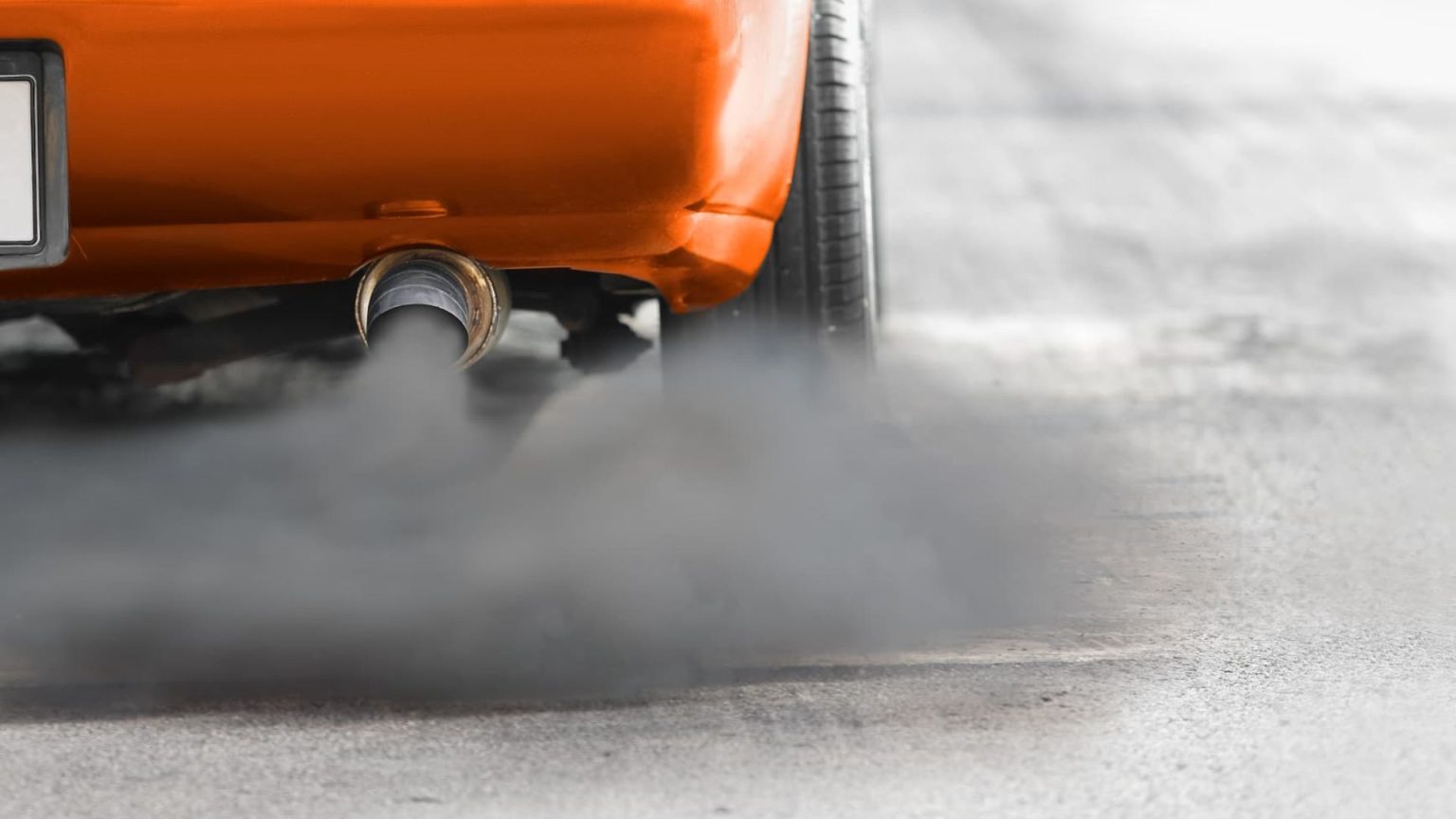
Even though black smoke from diesel engines occurs frequently, some individuals become anxious when they see it. It is a clear sign that there is something wrong with the car, and it is not operating as it should.
Apart from not being happy to see it, it indicates there is a problem with the engine and, in essence, points to an uneven fuel-to-air ratio or to a more serious problem. Diesel engines shouldn’t often emit much smoke when operating, but certain older diesels may occasionally emit some smoke when accelerating while under load.
So, how can one reduce the black smoke in a diesel engine?
Well, in this article, we’ll be discussing the answers to the following questions:
- What causes black smoke from diesel engines?
- Is the black smoke from diesel engines a dangerous sign?
- How can one reduce the black smoke in a diesel engine?
Ok, let’s dive in!
Learn more about Diesel Injector Cleaner with this detailed guide.
What causes black smoke in diesel engines?
Here are the most common causes of black smoke in diesel engines:
- Dirty or contaminated air filter
- Defective injectors
- MAF Sensor
- Clogged EGR valve
Dirty or contaminated air filter
Black smoke is a sign that the fuel is not being burned properly. Diesel vehicles’ internal combustion requires a specific proportion of fuel and air. The right balance of fuel to air is essential; otherwise, the combination will burn overly rich and produce black smoke.
Defective injectors
Your fuel system’s injectors play a crucial role. If they don’t open and close at the appropriate times or become clogged, they will end up injecting a lot more fuel into the cylinder.
When your automobile accelerates, the diesel engine’s exhaust emits black smoke as a result of this flawed process that creates solid carbon residue.
MAF Sensor
The computer’s ability to calculate the precise volume of gasoline to inject into the cylinder is also crucial. For the engine’s fuel and air mixture to form properly, the mass airflow sensor is in charge. If there is a problem, it will show increased airflow in the system and inject extra gasoline into the engine.
Clogged EGR valve
By sending engine emissions back to the combustion chamber rather than straight to the exhaust emission system, the EGR aids in recirculating the engine’s emissions.
The carbon chucks may clog your EGR valve, which will reduce your engine’s power, make it use fuel less efficiently, and cause black smoke to come out of your exhaust.
Learn more about Diesel Engine with this detailed guide.
Is the black smoke from diesel engines a dangerous sign?
Incomplete combustion of fuel can result in a number of problems, including decreased engine efficiency, increased fuel consumption, and increased emissions of toxic pollutants, therefore black smoke from diesel engines can be a dangerous sign.
To find and address the underlying cause of the black smoke, it is crucial to have the engine examined by a trained mechanic.
How can one reduce the black smoke in a diesel engine?
Here are a few things to do in order to reduce black smoke in a diesel engine:
- Replace the air filter.
- Clean or Replace the MAF Sensor.
- Utilize a diesel additive.
Replace the air filter
Checking the air filter and replacing it if it’s dirty should be your first step in reducing black smoke from your diesel engine.
The presence of black smoke in the combustion chamber is a certain sign that the fuel is barely partially burning.
When a diesel engine burns fuel, water and CO2 are released into the atmosphere. Black smoke, which typically results from an unbalanced air-fuel ratio, is a sign that something is preventing the fuel from burning entirely.
The air mixture entering the combustion chamber is the first place to look. Changing the engine air filter, which may be clogged, would be the easiest fix. The engine’s air-fuel ratio will run rich and leave unburned diesel fuel behind if there isn’t enough air getting to it.
There may be more symptoms in addition to the diesel engine emitting black smoke. Lack of power is caused by the imbalance, especially when accelerating or when the engine is being worked hard.
Costs for air filters range from $10 to $75 on average. It simply takes a few minutes to change the air filter, and you can do it yourself.
Clean or Replace the MAF Sensor
A defective MAF sensor is another problem that can be influencing the air-fuel ratio. The mass airflow sensor makes sure that the proper volume of air and fuel are combined when they enter the combustion chamber.
When the MAF sensor malfunctions, it may read the system’s airflow incorrectly, resulting in the addition of either too much or too little fuel. Black smoke from unburned gasoline remains, along with a host of additional issues.
If you’re lucky, carefully cleaning the MAF sensor with an electronic cleaner will usually suffice. However, you must exercise extreme caution to prevent harm to the sensor.
Usually, the Check Engine Light illuminates when the MAF sensor fails. With your OBDII scanner, you should be able to read the issue codes. But you can also experience difficulty accelerating or see black smoke coming from the exhaust.
Additionally, a defective mass airflow sensor can cause a rough idle, inadequate fuel efficiency, and difficult starting. The price to replace the MAF sensor ranges from $220 to $350.
Parts will account for between $175 and $280 of that price. Of the overall replacement cost, labor only accounts for around $45 to $70. With some basic mechanical knowledge, replacing most MAF sensors yourself is not difficult.
Utilize a diesel additive
Another effective method you can use to reduce black smoke in a diesel engine is to utilize a diesel additive. The problem might simply be brought on by carbon buildup if the car in question is old and has a lot of miles on it.
A diesel additive can remove the carbon buildup to make the engine more effective. But you must make sure you pick a premium diesel additive, such as Liqui Moly or Lucas. Diesel additives are excellent for achieving more than just reducing black smoke.
On the market, there are many different fuel additives, each with special components for a particular use. Most diesel additives won’t set you back more than $15 per bottle. For information on how often to use a bottle and how much fuel to put it in, check the instructions.
The ease of usage of a diesel fuel additive is its best feature. When you fill up the tank, simply pour the contents of the bottle in. Hopefully, the additive helps you maintain a better condition for your diesel engine and lowers the incidence of black smoke.
Learn more about Petrol and Diesel Engines with this detailed guide.
More Things To DO
The diesel itself is one of the components of the air-fuel mixture. There are many components that make up the fuel system that could be the problem. You should start by examining the most obvious and straightforward parts.
Start with the injector timing, EGR system, or fuel filter. Sometimes all it takes to fix the problem is to replace the EGR valve or a malfunctioning fuel filter.
Also, take into account the possibility that an obstructed injector is to cause. You must get a new fuel injector cleaner if the old one doesn’t work.
Using an OBD2 scanner to check the issue codes is the simplest way to manage the fuel system. Modern diesel engines have electronic controls for everything, and they typically alert you about problems with the fuel system.
If a diesel engine receives an incorrect amount of gasoline, black smoke may be visible rising from the exhaust. You might also detect a rough idle and subpar performance in general.
Additionally, because the engine isn’t operating at its finest, the vehicle probably won’t have its optimal fuel economy. Incorrect fuel burning may even cause you to smell it.
Replacing the fuel filter would be the least expensive fix. The parts for a new fuel filter typically cost between $50 and $100. Depending on the kind of filter you use and the manufacturer’s recommendations, these should also be changed every 10,000 to 25,000 miles.
On the other hand, a diesel injection pump replacement can be pricey. With parts costing between $1,200 and $1,700 and labor costing between $500 and $700, you may spend between $1,700 and $2,400 on the entire job.
Learn more about Blue Smoke with this detailed guide.
Conclusion
Reducing the black smoke in a diesel engine is not just important for better efficiency but also a best fuel efficiency and keeping the environment healthy. If you maintain your fuel system, making sure there is proper air intake, and using quality diesel, you will successfully reduce the excess smoke.
When you practice a regular servicing and early repairs it will help your engine run better, cleaner and a long lasting standard emission. With the correct maintenance, you diesel engine will deliver a better performance without producing unwanted black smoke.
FAQs
What causes excessive black smoke from diesel engines?
Insufficient residence time in the combustion zone, an excess of fuel (diesel fuel and lubrication oil), a lack of sufficient oxidants, or all three can lead to incomplete combustion and the formation of soot.
The main source of black smoke coming from a heavy-duty diesel engine’s exhaust is over-fueling.
What is the best diesel additive to reduce black smoke?
STP® Diesel Stop Smoke is a specifically formulated product that helps keep the fuel system and injectors clean while also greatly reducing exhaust smoke.
For diesel engines, this concentrated solution of detergent and dispersant maintains efficiency while potentially lowering operating expenses.
What are the methods used to reduce diesel smoke?
1) Running the engine at a lesser load can help diesel engines control black smoke in the exhaust. 2) Keeping the injection system in top condition. Utilizing higher cetane number diesel fuel.
Does black smoke mean too much fuel?
Typically, billowing black smoke indicates that your engine’s fuel-to-air ratio is excessively rich. This indicates that either the intake valves aren’t allowing enough air into the engine or that the fuel injectors are supplying too much fuel.
A malfunctioning fuel pressure regulator, a leaky fuel injector, or a dirty air filter could be to blame for this.
Why is my diesel blowing black smoke and losing power?
This problem stems from the fuel injection system’s improper utilization of fuel. Either too much fuel, the fuel of poor quality, not enough air, or not enough time for the fuel to burn properly is to blame.
If there is black or gray smoke coming from the exhaust, the car may also be underpowered and use too little fuel.
Can intercoolers cause black smoke?
The exhaust system emitting a lot of thick, black smoke is another indication that the intercooler is leaking. Because the engine can’t access colder air, more gasoline is consumed and expelled through the exhaust, which causes the smoke.