
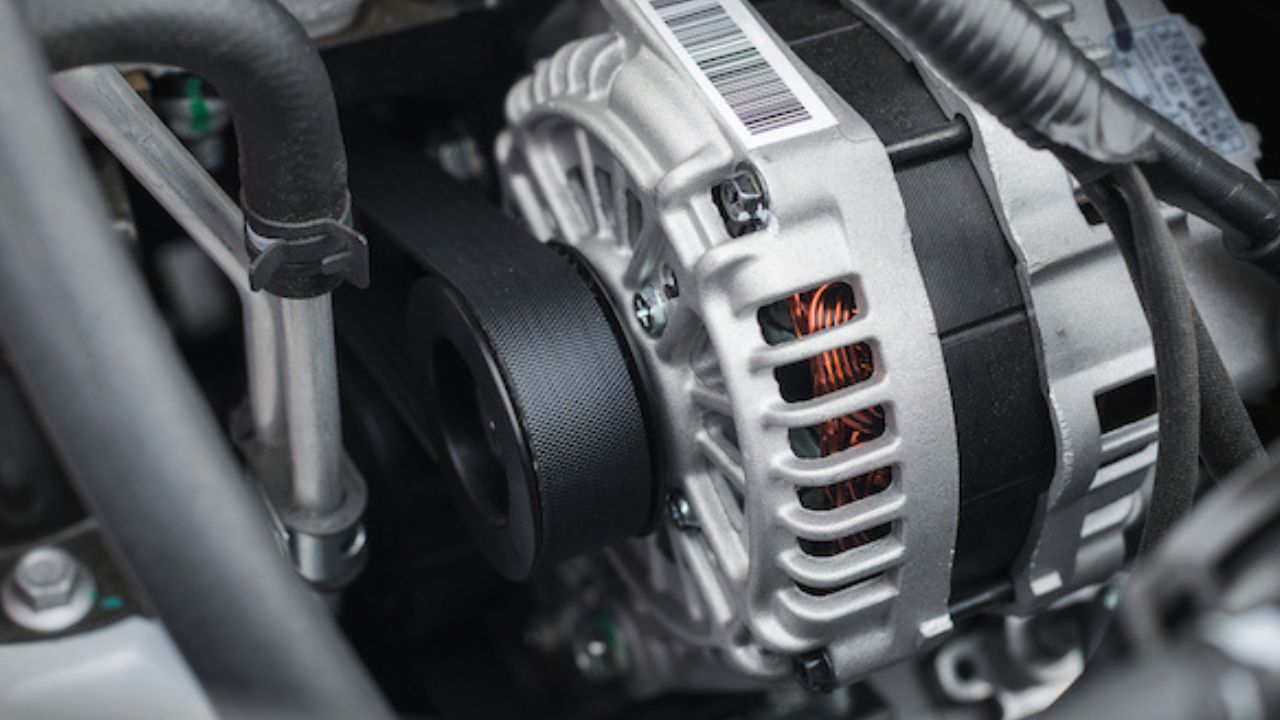
Undoubtedly, one of the most crucial components of your engine is the alternator. It maintains your battery’s charge while you travel down the road and is typically located at the front of the block.
If you notice your battery dying continuously or your lights are dimming, or your car struggles to start, it might be that your alternator is having an issue. This is why you must check it out. Most people think this is a tedious task, but the truth is, it’s easier than you think, and you don’t have to be a professional mechanic to spot the issue.
This is why in this reading, I’ll list and explain how to check your car alternator with a multimeter, and I’ll discuss the common signs of a bad alternator.
Let’s begin!
You should learn about Alternator with this detailed guide!
Signs of a Bad Alternator
The common symptoms of a bad alternator include a battery warning light on the dashboard, dim or too bright light, a dead battery, slow or malfunctioning accessories, trouble starting or frequent stalling, a growling or whining noise, smell of burning rubber or wires. Let me explain:
Battery Warning Light On The Dashboard
If you notice the battery warning light on your car dashboard illuminate, it’s a common sign that there is problem within the electrical charging system of your car. This may include the alternator, although many mistake it to be battery-related issue.
Car alternaotrs work at a specific voltage of about 13-14.5 volts. If it fails, it voltage may drop below its working capacity, resulting to the battery warning light to appear on your dash. The battery light may also appear if the alternator exceed it voltage limit, and this is usually depend on how much load it is under.
You should also learn How to Charge Your Car Battery With a Charger with this detailed guide!
Overly Bright or Dim Lights
Having an bad alternator or when the alternator’s voltage regulator begins to fail, you may experience inconsistent voltage to your electronic accessories. This is a common reason for over-or under performing equipment, that is the headlights are either too dim or extremely bright.
You may also experience flickering lights or it goes from bright to dim and vice-versa. If the issue is not quickly resolve, the overloaded lights can also fail prematurely.
Dead Battery
A dead battery is one of the obvious sign of a bad alternator. Although batteries may reach the end of their end life after few year of use. Sometimes it might be due to lack of proper usage, like accidentally leaving the headlights on all night. However, a dead battery indicate that the alternator is not charging the battery after usage or while it’s running.
This will cause the battery charge to deplete faster than usual. You can easily test with you have a bad battery or alternator by jumpstarting the car. If you jumpstart it and it stays running, just know your battery may need replacing soon.
If it dies shortly after disconnecting the jumper cables, you should know the alternator is not supplying enough power to the battery.
Faulty or Slow Accessories
A bad alternator may result to faulty and slow accesories. This is because the alternator is not supplying enough power to your car’s electronics making them much slower or malfunctioning.
So, if you notice it take time for your car’s window to roll up or down, or car radio not working properly, or even your speedometer misbehaving, something may be wrong with your alternator.
Although most modern vehicles tells the onboard computer where to cut power first if the alternator is not supplying enough electricity. So, a bad alternator may not allow you to use your car electronics like radio or headlights.
You should also learn Symptoms Of a Bad or Loose Alternator Belt with this detailed guide!
Starting Issues or Stalling
You may have trouble starting your car if the alternator is bad, this is because it is failing to charge your battery. This issue will cause a clicking sound instead of the normal engine starting sound.
Another common issue you will notice is frequent stalling while driving. This may be because the control modules aren’t getting enough power from the alternator to keep the engine running.
Growling and Whining Noise
You car may make odd sound when the alternator is faulty. This may also indicate other serious mechanical problems like drive belt issues. The growling or whining noises occur when the belt that turns the pulley in the alternator misalingned. It may rub against the side of the pulley causing the noise.
You sound may also occur if the bearings that spins the rotor shaft are going bad. Either way your should visit a professional mechanic immediately.
Burning Smell of Rubber or Wires
It is common for you to hear a bad smell that could indicate a part of the alternator is starting to wear out. This is because the alternator’s drive belt is under constant tension and friction. It could also be because it’s close to the hot engine and may wear out over time.
Overworked alternator with a damaged wires may cause burning smell odor and it will try to push too much electricity through that wire. This then result to intense heat and resistance to the flow of electric current.
You should also learn the 11 Reasons Why Car Battery Light is On with this detailed guide!
How to Check an Alternator with a Multimeter – Step by Step
- Buy or borrow a multimeter.
- Select DCV (DC Volts) above 15 on the multimeter you’re using.
- Make sure the positive and negative terminals on your alternator are clean.
- Connect the red cable of the multimeter to the positive terminal and the black cable to the negative terminal.
- A reading of 12.6 or so would be considered ideal for an alternator.
- Start the vehicle and check the gauge for a reading of 14.2 to 14.7.
- If the reading is over 14.7, the alternator is overcharging the battery; if it is under 14.2, the alternator is undercharging the battery.
- Turn on the lights, radio, fog lights, fan, and other devices, but watch out for the voltage reading dropping below 13.
- When you shut off the car, ensure that the reading is above 12.6.
- If any of these readings are incorrect, your alternator probably has a problem, and you should take it to a mechanic.
Conclusion
Checking an alternator is an important step to take when you notice any of the above symptoms. Using a multimeter and a simple few steps you will figure out whether your car charging system is healthy or faulty. It is important you pay attention to those warning signs early, like dim headlights, a weak battery, or electrical issues.
You can save yourself from getting strandedand help avoid bigger costs later. If you check your alternator and your test show low or unstable voltage, it’s best you have the alternator inspected or replaced before it damage other part of your car.
You should also learn How Many Volts Is A Car Battery with this detailed guide!
FAQs
How do you test if your alternator is bad?
Alternators may cause dimming lights and battery drain as output decreases over time. To test an alternator, use a multimeter to measure voltage at the battery terminals with the engine running; it should read 13.8-14.4 volts.
How can I test my alternator without a tester?
This is a simple way to test alternator output. With the engine idling, disconnect the negative battery cable. If the engine stalls out, it means the alternator can’t generate enough electricity to run the engine alone and is likely failing. If the engine keeps running, the alternator is still charging properly.
How to test alternator by disconnecting battery?
- Park in a safe place.
- Get the engine running.
- Find the positive and negative battery terminals.
- Disconnect the negative battery terminal.
- Run a voltage test using a voltmeter.
- Test the alternator using a multimeter.
Can I test an alternator while it’s in the car?
Never remove a cable while the car is running, instead use a multimeter or battery tester to read the voltage. Not a good idea on computer controlled cars. With engine at idle should have 14+ volts at the battery posts with a volt meter. With engine off and a good battery you should have about 12.6 volts.