
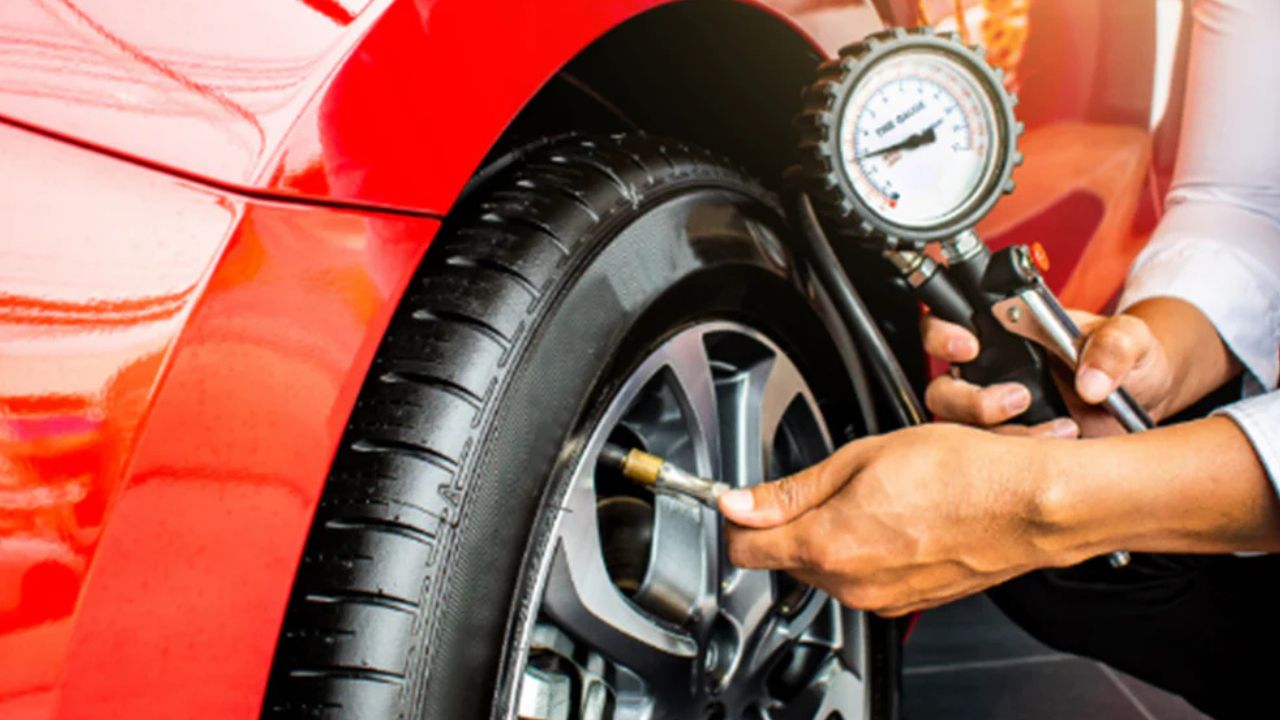
You must keep your car tires properly inflated to improve your car’s safety, efficiency, and performance. Even though it is one of the things most drivers forget to do, keep your vehicle properly maintained. When your tire is too low or too high, it can result in uneven wear, poor handling, reduced traction, and even a blowout. This is why you must check your tire pressure regularly.
Well, in this reading, I’ll explore how you can quickly check your car tire pressure in simple and easy steps without needing special skills or tools. I’ll also explain what a correct tire pressure should be and how to check it without a gauge.
So, let’s begin!
You should also learn How to Read Tire Sizes with this detailed guide!
How You Can Check Your Car Tire Pressure
One of the reasons it’s crucial to understand how and when to check your tire pressure is that underinflated tires may wear out prematurely. Tires with the wrong pressure can reduce gas mileage and have a negative effect on how your car handles. On a label inside the driver’s door, you can normally find the appropriate tire pressure for your car
The owner’s manual will also list it. It is often shown in Psi, or pounds per square inch, to measure tire pressure. You should also note that the tire pressure is listed on the sidewall. The recommended tire pressure for your car can be found on the door sticker or owner’s handbook, so stick with their recommendations. Now, how can you check your tire pressure?
You will require a tire pressure gauge, which is available at the majority of gas stations and auto parts retailers. Also, you should check the tire pressure when it is cold since, as you drive, friction heats up the tires and impacts the pressure.
If you’ve already driven the car, it’s advised to wait at least three hours for the tires to cool down before checking them. Otherwise, check them first thing in the morning. So let’s go in details on how to do this.
You should also learn Tire Rotation with this detailed guide!
Consult The Manufacturer For The Correct PSI
To get the recommended cold tire PSI for your front and rear tires, check the driver’s side door jamb or your owner’s handbook. Consult your car’s dealer, the manufacturer, or a certified tire expert if you can’t find it.
Begin With Cold Tires
Manufacturers of automobiles define PSI, or “pounds per square inch,” of tire pressure with the assumption that the tires are cold. After three hours or more of parking or after less than a mile (1.6 km) of moderately rapid driving, tires are deemed to be cold. Your pressure gauge measures in PSI and gives readings in that unit.
Note The PSI For Each Tire
To minimize confusion as you travel around in your car monitoring tire pressure, write down the proper PSI for each if your front and rear tires need different pressure levels.
Check Tire Pressure With The Gauge On Hand
Take off one of your tires’ valve caps. After that, set the pressure gauge on the valve stem and apply sufficient pressure so that the hissing sound stops and your gauge gives a reading.
With a typical gauge, air pressure will cause a little bar to emerge from the gauge’s base. The bar has measurement units carved into it. You can view the reading on a screen with a digital gauge. Repeat this step for each of the four tires, writing down the readings.
Fill Up To The Recommended PSI If Needed
Refill any low-pressure tires using an air compressor. Since many air compressors differ from one another, attentively reading the instructions can help you use them properly. To ensure that the hose can reach all four tires while using an air compressor at a petrol station, park carefully. Put change into the machine until you hear the motor going.
By positioning the hose end over the valve stem and pulling the lever, you can fill each tire. Your tires may be “hot” if you use an air compressor from a gas station.
When tires need to have their inflation pressure adjusted while they are “hot,” increase it by 4 psi (14 kPa) from the suggested cold inflation value. When the tires are cool, check the inflation pressure once more.
Utilize the gauge to recheck tire pressure after filling them. You can always let some air back out if you overinflated the tires at this stage. Never drive with tires that are too inflated. Increased pressure can lead to less traction, premature wear, and reduced impact absorption.
You should learn about Best Tire Pressure Gauge with this detailed guide!
Perform The Process Monthly For Maintenance
Make the previous process a recurring monthly ritual. The easiest way to make sure your tires never fall significantly below the ideal PSI is to regularly check your tire pressure.
How to Check Tire Pressure Without a Gauge
PSI Check
Your tire’s air pressure is measured in pounds per square inch. It informs you of the maximum inflation pressure your tire can handle. This information is typically found in the driver’s manual. It might also be seen on the doors on the driver’s side.
The number typically denotes the minimum pound-force per square inch that the tire should be filled to. However, you are free to change it as you see fit. For proper operation, greater pressure is required the more the vehicle can transport.
The recommended PSI for small vehicles like sedans and minivans ranges from 27 to 32. But if necessary, the tires can travel 40 miles. Because their tires require more inflation pressure to support the vehicle’s weight effectively, SUVs and trucks typically have a PSI of 45 or higher.
You should be aware that some pickup truck models have differing PSI ratings for the front and rear tires. To be certain, consult your handbook.
Mass Over Wheels
This approach is based on measuring the tire deformity after adding weight to the tires. You should put weight on the tires to determine the degree of tire deformation.
Low tire pressure causes a 10% to 15% change in tire deformation. You need a little bit more air in your tires if you see that much of a change. Check the tires gently as you apply pressure to make sure they don’t get incredibly rigid.
You should also learn about Best Tire Brands with this detailed guide!
Trail Comparison
You need a flat-surfaced road or pavement for this procedure. You must label your tires with ink or another marking material. After that, drive the car a little to leave a mark on the road. Watch the path your tires left behind after the drive.
There are some variations that can be seen by comparing the trail. When compared to other tires, low-pressure tires frequently leave a streak. Repeat the test while adding a bit more air to the underinflated tires until moderate pressure is obtained.
Cargo
The cargo test is functional. Consider packing the car with cargo to see if the tires might become bogged down. Logically, any low-pressure tire on your car will be weighed down by cargo.
You have low-pressure tires that require extra air pressure if you observe that one side of the automobile carries the cargo load more heavily than the other.
To level out the weight distribution, locate the tires that are underinflated and apply more air to them. But make sure that when you remove the load, you check and restore the tires’ Pound-force Per Square Inch (PSI) to normal by adding sufficient air pressure.
Hand Pressure
Push your palm against the tire to feel the pressure in order to check the tire pressure with your hand. While overinflated tires are extremely stiff, low-pressure tires are often soft and cushiony.
Add more air to the tire if it seems squishy. As you progressively add air, gradually check the pressure with your hand. If your tire’s air pressure is too high, squeeze the air nozzle’s stem until you can push the tire just a little bit.
You should also learn about Best Portable Tire Inflators with this detailed guide!
Eye Observation
You must first park your automobile on a level surface in order to use this technique to check your tire pressure. Check the tires of your car from both sides after you’ve parked it.
What you’re searching for is a bulge, which is a spherical swelling coming from one of the tire’s sides. Your tire pressure is low if there is a bulge of more than ten millimeters on either side.
Before driving, you might need to pump the tires. Tires should be inflated until they are firm but not painfully so.
Conclusion
Check ing your tire pressure is one of the small habit you can use to make big difference in your car. You’re guarantee to have an extended tire life, improved vehicle handling, and better fuel efficiency if it’s performed regularly. Most importantly, it keep you safer on the road.
The best thing is, it only take you a few minutes to check it with a tire gauge. Doing so will prevent unven wear, unexplected blowout and poor traction. This is why i urge you to add tire pressure pressure checks to your regular car maintenance, so you can enjoy better performance, and even save money over time.
You should also learn about Tire Cupping with this detailed guide!
FAQs
What is the correct way to check tire pressure?
How to check tire pressure, you must:
Remove the cap from the air valve on the tire, and put it somewhere you won’t lose it.
Press the tire gauge against the open valve stem for a second or two.
Read the air pressure gauge.
Compare this number with the recommended tire pressure.
Replace the tire’s air valve cap.
How do you check tire pressure at a gas station?
To check your tire pressure in gas station, you have to pressure compare the tire pressure reading from the gauge to the recommended. Pressure be sure to check all four tires. Often you can’t tell a tire is low just by looking at it.
How do I check my tyre pressure at home?
when checking your tire pressure at home, remove the valve caps on each wheel. Insert the gauge onto the valve and push until the hissing sound stops. Check the PSI reading and compare it to the recommended PSI for your vehicle. Determine whether you need to increase or decrease the air in your tyres.
What is the normal PSI for a tire?
Recommended tire pressures vary with the size of the car and its tires. Based on normal tire sizes for each segment, small-sized car are usually 30 psi, medium-sized cars are 36 psi, and large cars are 42 psi. Keep in mind that warm tires normally exceed recommended cold tire pressures by 4-6 psi.
Is 40 psi too high for tire pressure?
No, for most cars a tire pressure of 40 psi is too high. You might find 40 psi suitable for some vehicles, especially if they’re carrying heavier loads or if the manufacturer’s recommendation is close to that figure. However, it’s generally too high for most passenger cars, which usually recommend between 30-35 psi.
Is it OK to drive with low tire pressure?
If you notice low pressure, reduce your speed and head to the nearest air source as soon as you can. Continuing to drive with deficient tire inflation can lead to poor handling, decreased fuel efficiency, and premature tire wear.
Can weather affect tire pressure?
This is due to the fact that temperature fluctuations result in air volume changes. When air becomes cooler, it takes up less volume, meaning the air pressure in your tires will decrease. When air becomes warmer, it takes up more volume, meaning the air pressure will increase.
https://studentlesson.com/how-to-check-tire-pressure/